By John McDonald (CityWatch NZ Editor)
Hamilton City has seen a shift away from installing raised platforms and in-lane bus stops over the last year. A variety of factors has contributed to this shift.
At a central government level, former Transport Minister Simeon Brown turned off the tap and the flow of funds going into speed hump projects. That decision removed one major financial incentive for councils to install expensive speed humps.
The situation was worse than just councils spending what they viewed as ‘free money’. Central government grants or subsidies for transport projects were counted as income on in the council finances. With more income on the books councils could borrow more money without breaching the debt/revenue limits. More speed bumps and more expensive speed humps = more subsidy revenue. More revenue = higher debt limit. Higher debt limits = more council borrowing.
At a local level, public opposition to speed humps, cycle lanes, and in-lane bus stops grew. People were more vocal towards councillors, as well as candidates in the elections. We had a few by-elections, and a full council election later in 2025. The design of roads to frustrate the smooth flow of motor vehicles became a major election issue, alongside wasteful spending more generally.
CityWatch NZ has covered the raised platform issue from early 2024. What the authorities call “traffic calming” was one of the first major issues our website focused on with research, articles, and opinion pieces. We pushed the somewhat radical idea that installing dozens of large speed humps, and other obstacles, on major roads could have some side-effects and negative impacts. Such installations might not be the unquestionable good that their promoters would have us believe. We collected the evidence that the highly-paid experts and consultants should have been providing to councils and the wider community so that balanced and informed discussions could occur.
One of the more absurd raised crossings, featured prominently CityWatch NZ content, has now been redone as part of the recently road resealing at Five Cross Roads. The slope of the speed bump appears to have been reduced.
 The zebra crossing at Five Cross Roads in early 2024
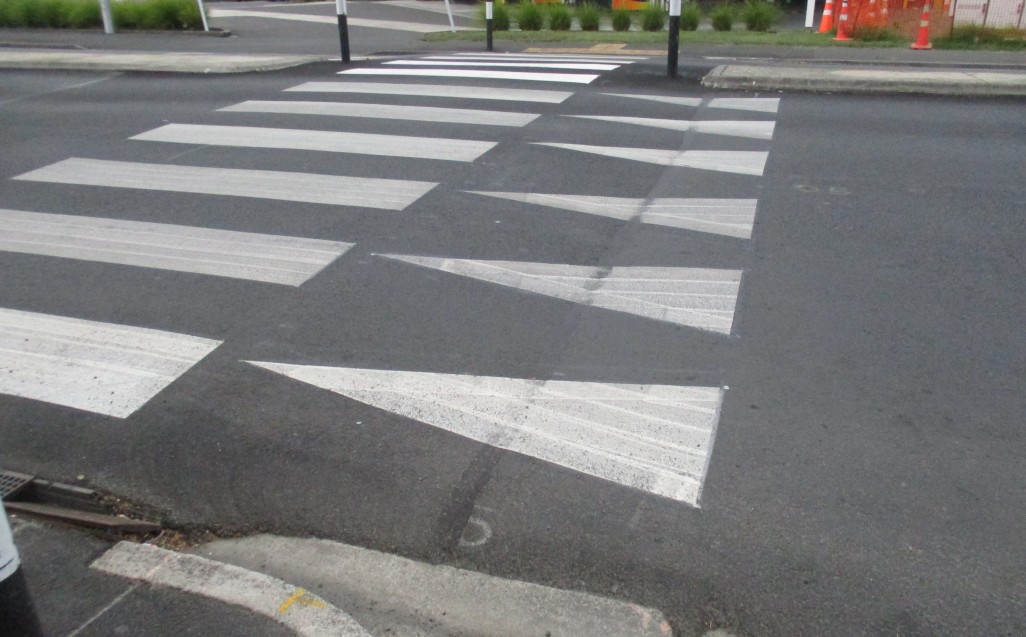 The redone zebra crossing at Five Cross Roads (early 2026)
The proposed raised platform zebra crossing near one of Hamilton’s busiest roundabouts was converted into a light-controlled crossing without a speed hump. That Heaphy Terrace crossing was set back further from the roundabout than the original design, and removing the raised crossing from the design possibly saved the City over $100,000. Arguably the crossing is still too close to the roundabout and too expensive, though it is better than the original design.
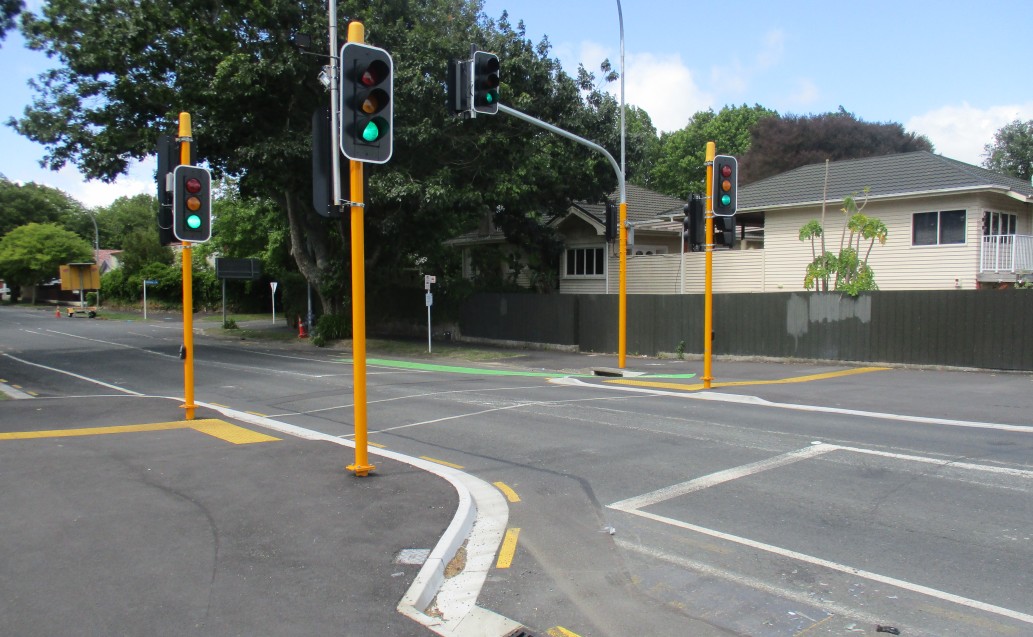 The new Heaphy Terrace crossing
The $13 million Te Aroha Street/Ruakura Road project has been removed from the Council’s official plans, which should end the agenda to install over 10 raised crossing and at least 4 in-lane bus stops along those busy roads.
Hamilton City Council has recently made improvements to an existing bus stop on Te Aroha Street. Importantly, the upgraded bus stop is not an in-lane bus stop and the upgrade went in as concrete. Hopefully this indicates that the halting of the larger Te Aroha Street/Ruakura Road project is permanent.
It is important to achieve concrete changes.
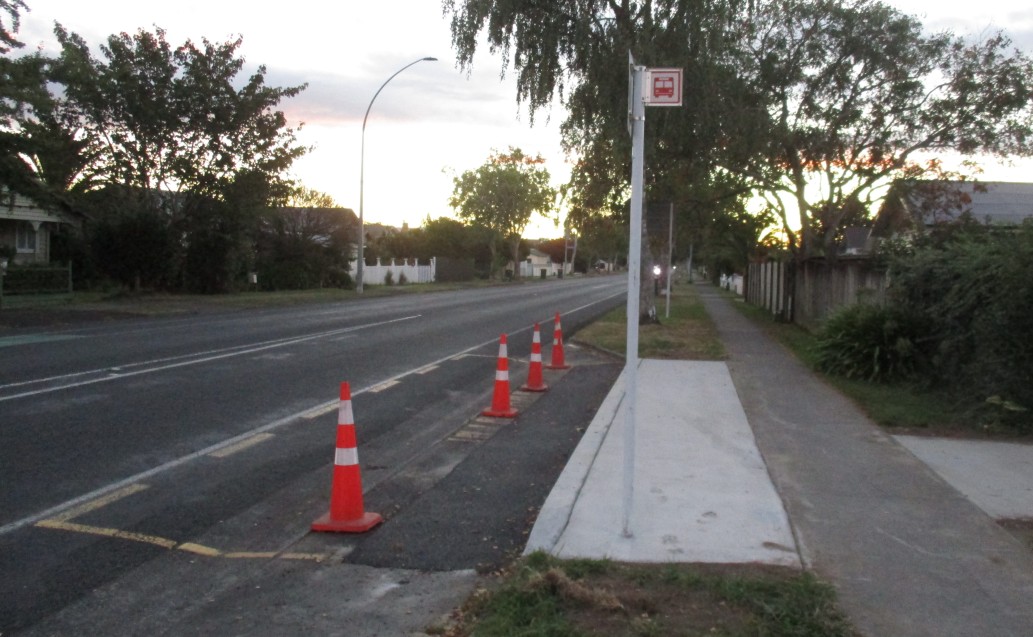 The upgraded Te Aroha Street bus stop
In more good news, the almost complete road upgrade and cycleway installation on Cambridge Road (at the intersection of Prescott & Flynn) does not have any raised platforms crossings. This is a vast improvement over the standard practice of 3-4 years ago where at least two speed bumps would likely have been installed for this project.
The Cambridge Road project still installed those low concrete ‘cyclelane protector barriers’, often called “tim-tams”. These obstacles will will no doubt damage vehicles, cause accidents, and invoke complaints from a wide range of road users (including cyclists). The project on one side of the road with the angled carparks, and the cyclelanes looks more sensible than the City Council’s past designs.
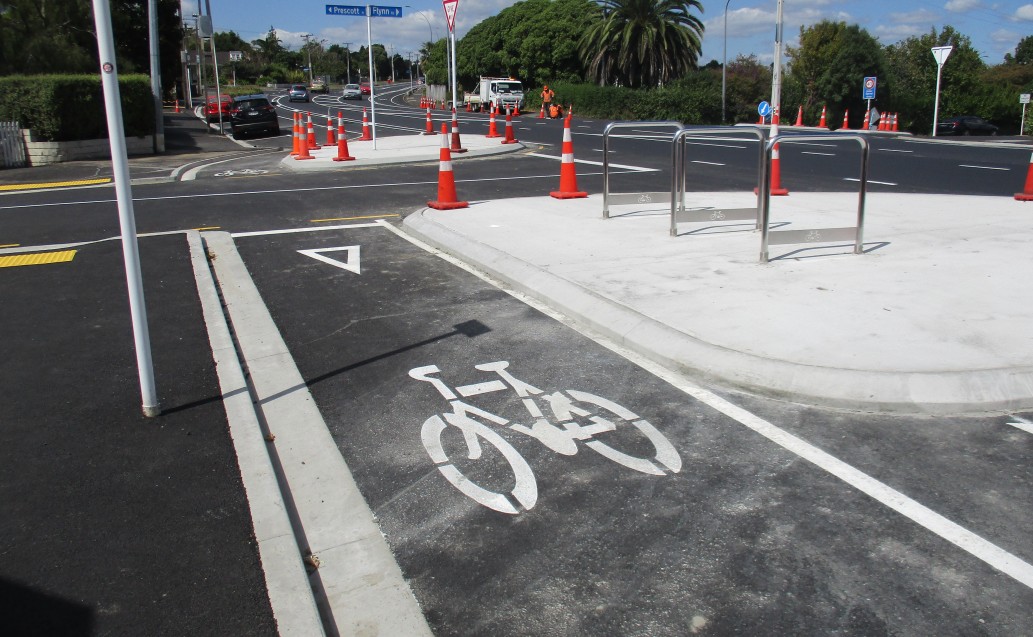 The new cycleway installation on Cambridge Road (at the intersection of Prescott & Flynn)
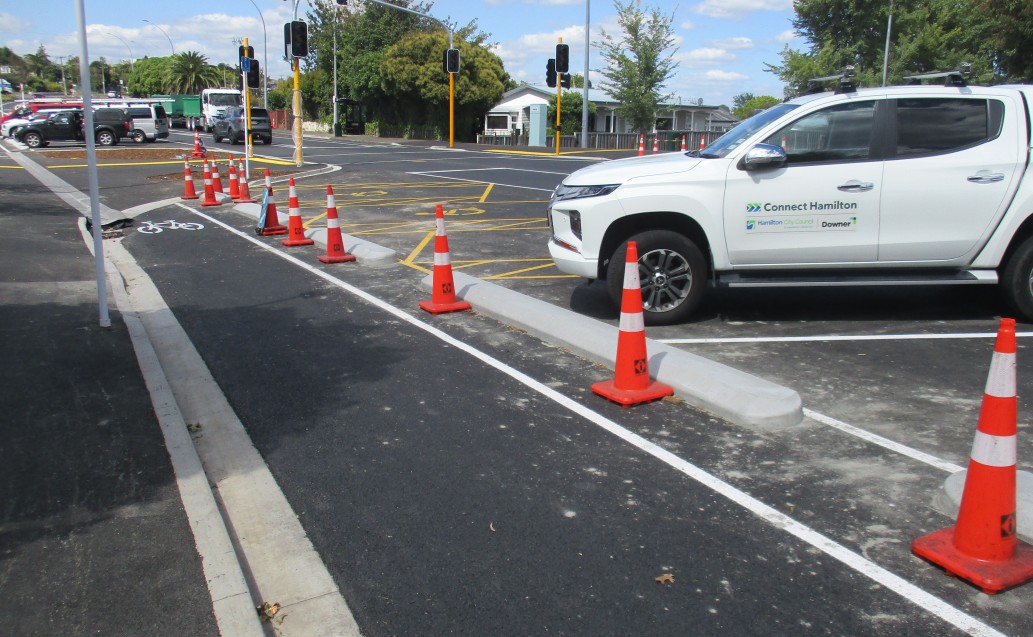 The new cycleway installation on Cambridge Road (near the intersection of Prescott & Flynn)
Hamilton City’s roads are far from fixed. These are, on the whole, promising development. A few raised platforms are still due to be installed and we need to keep pushing to have the worst obstacles removed from the City’s major roads (looking at Hukanui Road and Pembroke Street).
Get good information. Be reasonable. Keep the pressure on.
[The content of any Opinion pieces represents the views of the author and the accuracy of any content in a post labelled Opinion is the responsibility of the author. Posting of this Opinion content on the CityWatch NZ website does not necessarily constitute endorsement of those views by CityWatch NZ or its editors. CityWatch NZ functions to provide information and a range of different perspectives on New Zealand’s cities and local councils. If you disagree with or dispute the content, CityWatch NZ can pass that feedback on to the author. Send an email to feedback@citywatchnz.org and clearly identify the content and the issue.]
Further reading on this issue:
What are the disadvantages and negative impacts of “traffic calming”?
OPINION: A City on the Move — But Not in the Right Direction