By Mark Flyger (Financial Accountant and CFO Modern Transport Group)
Originally published on Better Hamilton
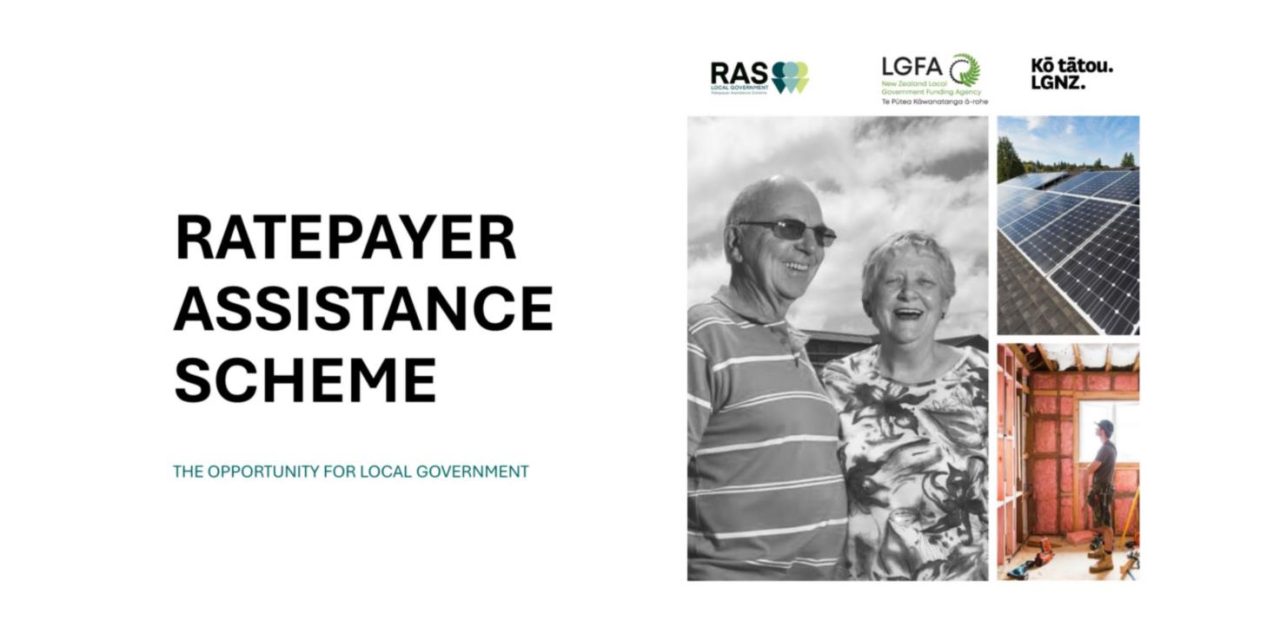
A proposal heading to Hamilton City Council’s Finance and Monitoring Committee on 24 June is set to decide whether to speculate with $500,000 of ratepayer money in a so-called “Ratepayer Assistance Scheme”.
But behind the glossy branding lies a plan that risks pushing already struggling homeowners further into debt.
Marketed as a solution to the cost-of-living crisis and housing affordability, the scheme’s reality is far less reassuring.
At its core, it operates like a reverse mortgage—offering financial assistance now in exchange for long-term debt repayments later, secured against a ratepayer’s property.
This is not genuine support. It is deferred debt disguised as help.
Under the proposal, a newly created Council-Controlled Organisation (CCO) would lend money to homeowners to cover their rates. Repayments would be made later through levies on the property—effectively saddling vulnerable households with growing financial obligations.
Presumably the CCO board will also extract directors’ fees and the like, paid for by our poorer ratepayers.
The development of the Ratepayer Assistance Scheme proposal to date has focused on three key applications:
1. rates postponement
2. deferred development contributions/development levies, and
3. property improvement loans.
In principle, the Ratepayer Assistance Scheme could also be applied to other property related taxes including Infrastructure Funding and Financing (IFF) levies and the recently announced Development Levy System.
There are serious concerns with this proposal, however.
There’s little detail on repayment terms, interest rates, or what happens if property values drop.
If the scheme fails to attract the targeted $2.5 million in external funding, Hamilton’s $500,000 stake could vanish entirely.
The new CCO would be governed by those who helped design the scheme, raising fears of cronyism and a closed loop of self-appointment—jobs for the boys, in all but name.
The scheme proposal is deliberately structured to sit “off balance sheet”, adding to its opacity and making it harder for ratepayers to track where their money is going.
Despite these risks, the Council is framing this as a “low significance” decision.
That’s misleading.
With a potential $30 million in long-term capital requirement proposed and a model based on extracting money from homeowners, this is no minor matter.
Hamilton needs real support for struggling families—not cleverly branded financial instruments and murky governance structures. This scheme, if mishandled, could entrench hardship rather than ease it.
Better Hamilton calls on residents to demand transparency, independent oversight, and genuine consultation before a single dollar more is committed.
Your rates are not a slush fund.
Let Council know: enough is enough.
[The content of any Opinion pieces represents the views of the author and the accuracy of any content in a post labelled Opinion is the responsibility of the author. Posting of this Opinion content on the CityWatch NZ website does not necessarily constitute endorsement of those views by CityWatch NZ or its editors. CityWatch NZ functions to provide information and a range of different perspectives on New Zealand’s cities and local councils. If you disagree with or dispute the content, CityWatch NZ can pass that feedback on to the author. Send an email to feedback@citywatchnz.org and clearly identify the content and the issue.]
Further reading on this issue
Hamilton City Council votes to fund work towards creating new multi-council finance company
OPINION: The 2025/26 HCC Budget – More of the Same and No “Fresh Thinking” (Yet) for Election Year